
——BYFO equipment maintenance manual
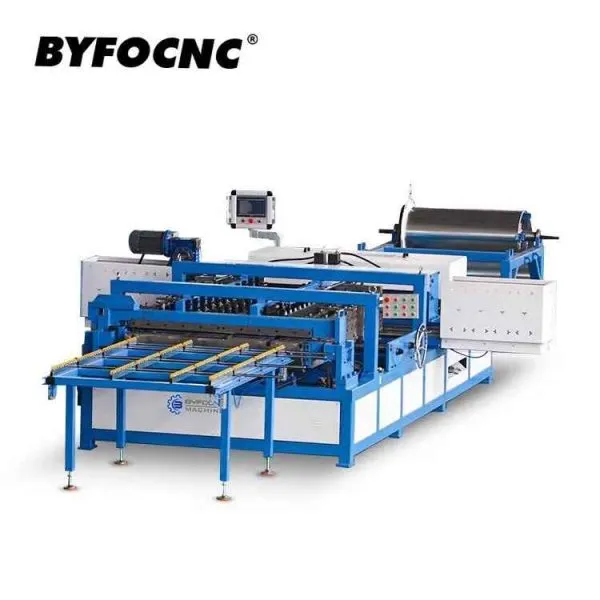
Spiral duct machine is the core equipment of air duct processing enterprises, and its operating status directly affects production efficiency and product quality. However, even the most sophisticated equipment, without proper maintenance and use, will gradually experience various malfunctions, affecting production progress and increasing maintenance costs. Instead of waiting for the equipment to strike before repairing, it is better to maintain it carefully on a daily basis to prevent problems before they arise.
Based on years of experience in duct equipment manufacturing and after-sales service, BYFO has compiled this guide for troubleshooting and maintenance of spiral duct machines to help your equipment maintain optimal condition in the long term.
Ⅰ. Common troubleshooting and solutions
Fault 1: The shape of the air duct is not round
Phenomenon description:
The cross-section of the formed air duct is elliptical or irregular, and the roundness exceeds the standard, which affects the subsequent connection and installation.
Possible reasons:
1. Improper adjustment of the gap between the forming rollers
2. The thickness of the sheet does not match the equipment settings
3. The forming roller is severely worn
4. Improper feeding and deviation of the sheet material
Troubleshooting steps:
1. Check if the thickness of the sheet is within the processing range of the equipment
2. Measure the gap between the forming rollers to confirm whether it meets the thickness requirements of the sheet metal
3. Observe whether there are obvious wear marks on the surface of the forming roller
4. Check if the feed guide device is aligned to the center
Solution:
-Adjust the gap between the forming rollers again, usually the gap should be 0.8-0.9 times the thickness of the sheet
-Replace severely worn forming rollers
-Adjust the feeding guide wheel to ensure that the sheet is fed in the center
Preventive measures:
-Regularly check the wear of the forming rollers
-When switching between sheets of different thicknesses, it is necessary to readjust the roller gap
Fault 2: The bite is loosed or detached
Phenomenon description:
The bite of the air duct is not fully compressed, and there is obvious looseness when pressed by hand, and it can even be separated with slight force.
Possible reasons:
1. Insufficient pressure of bite device
2. Wear and tear of bite mold
3. High rebound rate of sheet metal (such as stainless steel material)
4. Insufficient bite depth
Troubleshooting steps:
1. Check if the pressure of the bite device is normal
2. Observe whether the edge of the bite mold is worn
3. Use a caliper to measure whether the bite depth meets the standard
Solution:
-Adjust the pressure of the bite device and increase the clamping force
-Replace worn bite molds
-For high rebound materials, the bite depth can be appropriately increased or pre pressing technology can be used
Preventive measures:
-Check the bite quality every shift and adjust it promptly if any looseness is found
-Reduce production speed appropriately before processing hard materials such as stainless steel
Fault 3: Cutting burrs are severe
Phenomenon description:
The edge of the cut spiral duct has a large number of burrs, which require secondary polishing and affect installation efficiency and safety.
Possible reasons:
1. Cutting blade wear
2. Improper setting of cutting gap
3. Cutting speed too fast
4. Abnormal hardness of the sheet
Troubleshooting steps:
1. Observe whether the cutting blade becomes dull or has a notch
2. Check the gap between the cutting blades
3. Check the running speed during cutting
Solution:
-Replace the cutting blade with a new one
-Adjust the blade clearance, usually 10% -15% of the sheet thickness
-Reduce cutting speed appropriately, especially for thick sheets or hard materials
Preventive measures:
-Establish blade replacement records and regularly replace them
-Keep the blade clean and avoid sticking metal shavings
Fault 4: Abnormal noise or vibration during operation
Phenomenon description:
The equipment makes abnormal noise during operation, or there is obvious vibration on the body.
Possible reasons:
1. Bearing damage or poor lubrication
2. Loose transmission chain/belt
3. The forming roller gets stuck with foreign objects
4. Loose foundation bolts of the equipment
Troubleshooting steps:
1. Turn off the equipment and manually turn the wheel to feel the resistance
2. Check whether there is any abnormal noise or heating in each bearing part
3. Observe whether the transmission components are loose
4. Check the tightening condition of the foundation bolts
Solution:
-Add lubricating oil or replace damaged bearings
-Adjust the tension of the chain/belt
-Clean up foreign objects between the forming rollers
-Re tighten the foundation bolts
Preventive measures:
-Check the transmission components before starting up daily
-Keep the equipment clean and prevent debris from entering
Fault 5: Poor feeding or stuck material
Phenomenon description:
The sheet gets stuck, slips or deviates during the feeding process.
Possible reasons:
1. Insufficient pressure on the feeding roller
2. Oil stains or debris on the surface of the sheet
3. Wear of feeding roller
4. Excessive curling of the sheet
Troubleshooting steps:
1. Check if the pressure of the feeding roller is sufficient
2. Observe whether the surface of the sheet is clean
3. Check if the surface pattern of the feeding roller is worn
Solution:
-Increase the pressure of the feeding roller
-Clean the oil stains on the surface of the sheet
-Replace worn feeding rollers
-For severely curled sheets, perform pre leveling first
Preventive measures:
-Pay attention to moisture and dirt prevention when storing sheets
-Regularly clean the feeding roller
Fault 6: Control system alarm
Phenomenon description:
The touch screen displays a fault code, and the equipment cannot start normally or run.
Possible reasons:
1. Abnormal sensor signal
2. Motor overload
3. Encoder malfunction
4. Program parameter error
Troubleshooting steps:
1. Record the alarm code and refer to the instruction manual
2. Check if all sensors are sensing properly
3. Check if the motor current exceeds the limit
4. Confirm whether the parameter settings are correct
Solution:
Handle according to the alarm code guidance
Clean the dirt on the surface of the sensor
Reset the overload protector
Re calibrate or restore factory parameters
Preventive measures:
Regularly check the cleanliness of sensors
Operators should be familiar with the meaning of basic alarm codes
Ⅱ. Daily maintenance plan
2.1 Daily maintenance (per shift)
| Maintenance items | Operation content | Points for attention |
| Equipment cleaning | Remove metal shavings and dust from the fuselage, forming rollers, and cutting areas | Take precautions to protect electrical components when using air gun purging |
| Lubrication inspection | Check the oil level at all lubrication points and add lubricating oil as needed | Use the specified grade of lubricating oil |
| Bite inspection | Inspect the quality of the finished air duct bite and confirm there is no looseness | Stop the system immediately to adjust when issues are detected |
| Abnormal sound monitoring | Perform idle rotation upon startup and listen for any abnormal noises | Shut down for inspection during abnormal conditions |
| Safety device | Check whether the emergency stop button and protective cover are functioning properly | Ensure the safety device is sensitive and reliable |
2.2 Weekly maintenance
| Maintenance items | Operation content | Points for attention |
| Transmission components | Check the chain tension and adjust or add lubricating grease if necessary. | Excessive chain slack can cause tooth skipping. |
| Tightening inspection | Check whether the anchor bolts and all connecting bolts are loose | The inspection frequency for vibration environments should be increased. |
| Electrical inspection | Check for looseness or heating at wire joints | Power-off procedure, safety precautions |
| Forming roller cleaning | Remove adhesive residues from the roller surface and inspect for wear conditions | Severe wear requires prompt replacement |
| Feeding roller cleaning | Clean the surface of the feeding roller and inspect for pattern wear. | Wear of patterns may lead to slippage |
2.3 Monthly maintenance
| Maintenance items | Operation content | Points for attention |
| Gearbox oil change | Inspect the gearbox oil quality and replace it when necessary. | Oil change is required after 500 hours of first use |
| Bearing lubrication | Add grease to all bearing housings | Avoid overfilling |
| Cutting blade | Check the blade sharpness and grind or replace it when necessary. | Blade passivation affects incision quality |
| Belt inspection | Inspect belt wear and tension | Replace worn belts promptly |
| Pneumatic system | Inspect the air source triple assembly, clean the filter, and check the oil mister. | Unstable atmospheric pressure affects the operation of actuating elements |
2.4 Quarterly maintenance
| Maintenance items | Operation content | Points for attention |
| Accuracy calibration | Check the precision of fixed-length cutting and calibrate the encoder if necessary. | Precision deviation may affect product dimensions |
| Forming roller inspection | Comprehensive inspection of forming roller wear condition | Wear exceeding limits affects roundness |
| Electrical cabinet cleaning | Clean the dust inside the electrical cabinet and inspect the cooling fan | Dust accumulation may lead to poor heat dissipation |
| Mold inspection | Inspect the bite mold for wear | Mold wear affects bite quality |
| Complete machine inspection | Conduct a comprehensive inspection of all equipment components to identify potential hazards | Recommended for professional execution |
Ⅲ. List of vulnerable parts and replacement cycle
| Vulnerable parts name | Normal service life | Replacement criteria | Remarks |
| Cutting blade | 200,000 to 500,000 meters | Significant increase in surgical incision burrs | Replace after 2-3 cycles of grinding |
| Forming roller | 1 to 2 million meters | Surface wear and reduced roundness | Dependent on sheet thickness and material |
| Bite mold | 500,000 to 1,000,000 meters | Bite loss and dimensional deviation | Stainless steel processing reduces service life by half |
| Feeding roller | 500,000 to 800,000 meters | Surface pattern is smoothed and slippery | Removable for refurbishment |
| Bearing | 1 to 2 years | Abnormal noise, heat generation, large clearance | Regular lubricant replenishment prolongs service life |
| Transmission chain | 1 to 2 years | Elongation exceeding 5%, tooth skipping | Maintain appropriate tension |
| Belt | One year | Cracks, aging, slipping | Replace in pairs |
| Seal ring | One year | Leaky hardening | Key components of pneumatic systems |
Ⅳ. BYFO’s after-sales service guarantee
To ensure that your equipment is always in the best condition, BYFO provides comprehensive after-sales support:
4.1 Remote technical support
-7 x 24-hour phone response
-Remote video guidance for troubleshooting
-Direct delivery of accessories by express
4.2 On site service
-Engineer on-site installation and debugging
-Engineer on-site maintenance
4.3 Regular inspection
-Optional annual inspection service
-Early detection of potential faults
-On site operation training
4.4 Accessory Supply
-Adequate inventory of original factory accessories
-Recommended inventory list of vulnerable parts
-Emergency parts shipped 24 hours a day
Ⅴ. Conclusion
Spiral duct machine is the core productivity of air duct processing enterprises, and its operating status directly affects production efficiency and product quality. Through regular maintenance and timely troubleshooting, not only can the service life of the equipment be extended, but the losses caused by unexpected shutdowns can also be reduced.
Remember: the best maintenance is preventive maintenance.
BYFO company has always been committed to providing customers with high-quality air duct equipment and professional technical support. If you encounter any problems during the use of the equipment or need more detailed operation guidance, please feel free to contact us at any time.
Does the equipment need maintenance? Or do you encounter a malfunction?
Welcome to contact BYFO after-sales service center, we will provide you with the most professional support and solutions.