
The connection method of the air duct directly affects installation efficiency, sealing performance, and long-term maintenance costs. Here are 5 mainstream ways to compare and help you quickly choose.
Ⅰ. List of 5 Connection Methods
| Connection method | Principle | Sealing performance | Installation rate | Cost | Applicable scene |
| Angle steel flange | Secure the angle steel ring with bolts | ★★★★☆ | Slow | High | High pressure, large diameter, outdoor |
| Common plate flange (TDF) | Direct forming of flange edges from plates | ★★★★☆ | Fast | Medium | Medium and low pressure, indoor air conditioning |
| No flange socket | Insert one end into the other after narrowing one end | ★★★☆☆ | Very fast | Low | Round air duct, low pressure ventilation |
| Insert connection | S-shaped or C-shaped insert clamping | ★★☆☆☆ | Medium | Low | Rectangular air duct, temporary or low requirements |
| Welding connection | Full weld sealing | ★★★★★ | Slow | High | Stainless steel air duct, clean room, high temperature |
Ⅱ. Detailed Interpretation
1. Angle steel flange
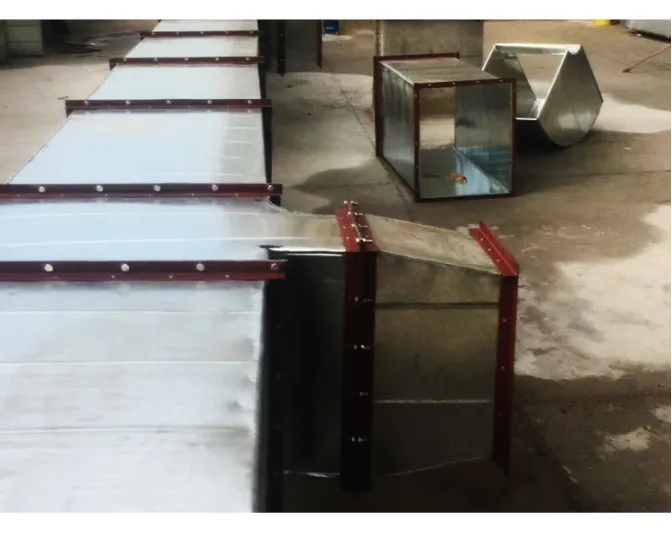
Method: Weld angle steel rings on both ends of the air duct, add a sealing gasket in the middle, and tighten the bolts.
Advantages: High strength, high pressure resistance, suitable for large duct diameters.
Disadvantages: High material and labor costs, slow installation.
Choose it if: System pressure>1500Pa, or if the duct is outdoors or buried underground.
2. Common plate flange (TDF)
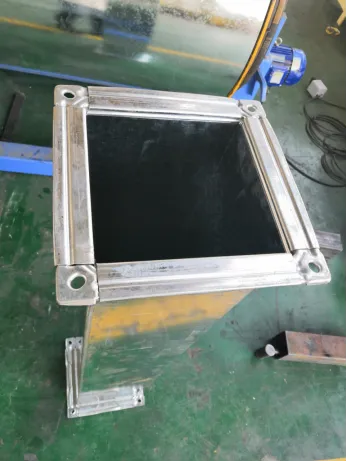
Method: Form the flange edge of the air duct plate directly and fix it with corners and bolts.
Advantages: Material saving, fast installation (50% faster than angle steel flanges), good sealing performance.
Disadvantages: The strength is lower than that of angle steel flanges, and it is not suitable for ultra large duct diameters or high pressures.
Choose it if: Conventional air conditioning ventilation, smoke exhaust (medium and low pressure), pursuing efficiency.
3. No flange socket
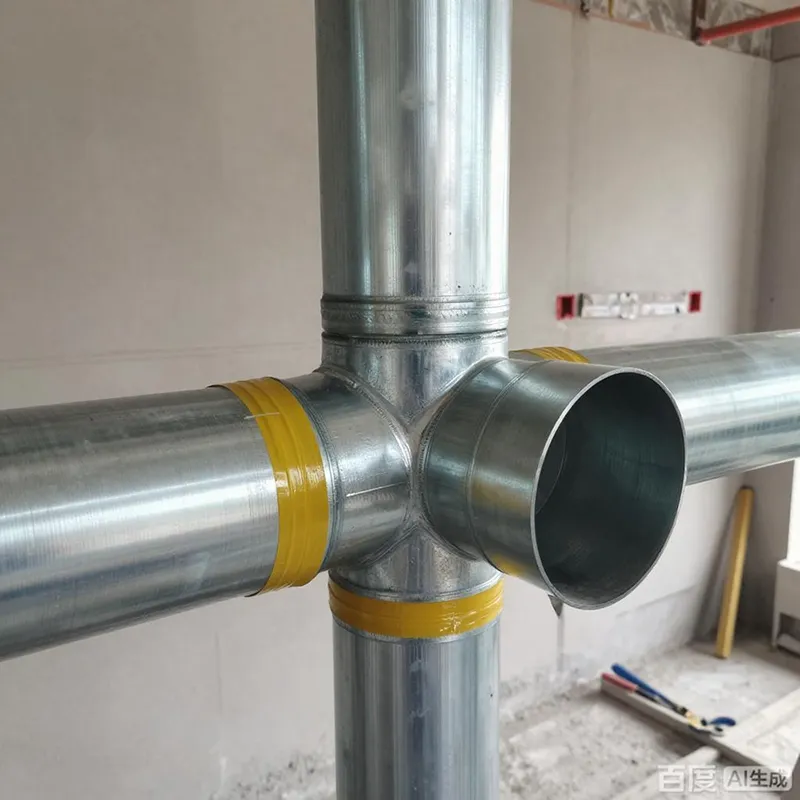
Method: Narrow one end of the air duct and insert it directly into the other end, cooperating with sealing tape.
Advantages: No bolts, fast installation, and lowest cost.
Disadvantages: The sealing performance is average, the tensile pull resistance is poor, and it is not easy to disassemble.
Choose it if: Round spiral duct, temporary ventilation, low pressure air supply.
4. Insert connection
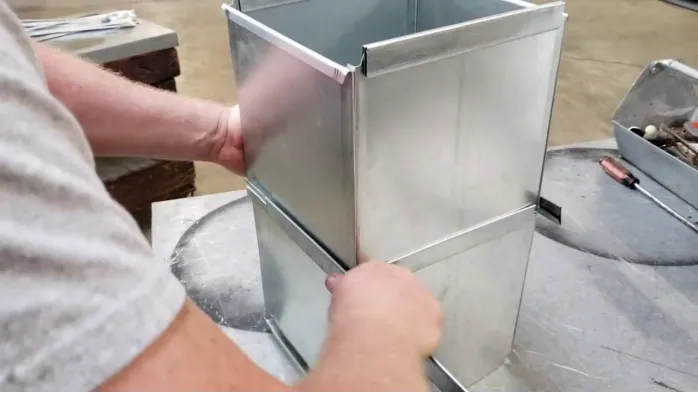
Method: Fold both ends of the rectangular air duct and secure it with S-shaped or C-shaped inserts.
Advantages: No need for flanges, simple tools, suitable for on-site production.
Disadvantages: Poor sealing, easy air leakage, low strength.
Choose it if: temporary works, low requirement ventilation, or as an auxiliary connection.
5. Welding connection
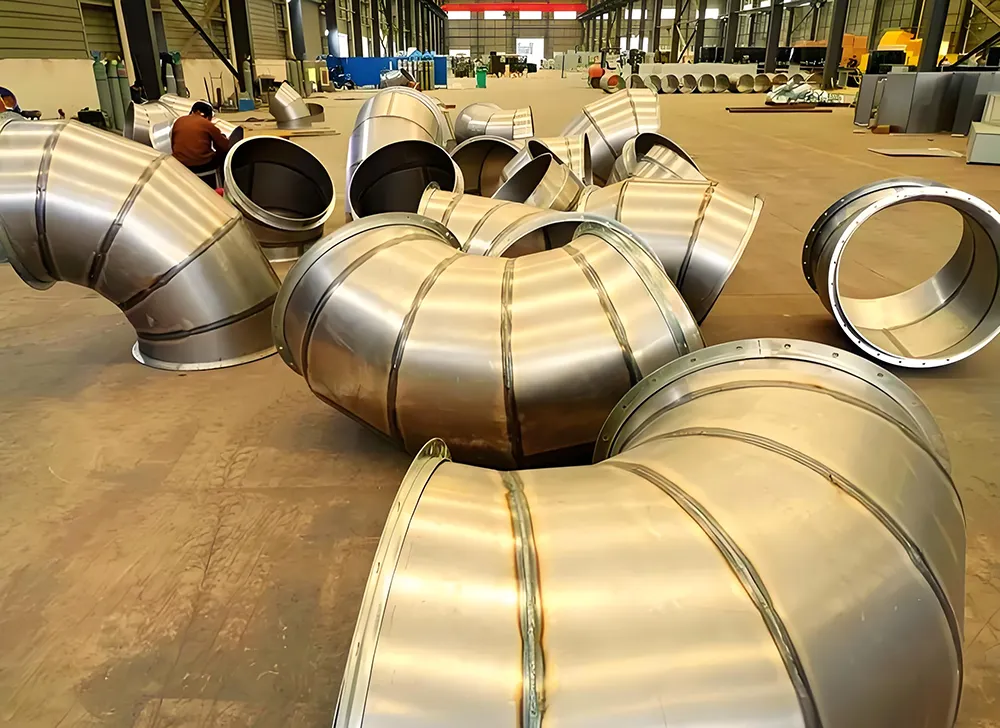
Method: After the air duct is connected, it is fully welded, usually used for stainless steel.
Advantages: Absolute sealing, smooth inner wall, no air leakage.
Disadvantages: High process requirements, non removable, high cost.
Choose it if: Food/pharmaceutical cleanrooms, high temperature smoke ducts, hygiene requirements.
Ⅲ. Quick Selection Guide
1. Conventional commercial air conditioning (medium and low pressure) → common plate flange (highest cost-effectiveness)
2. High pressure, outdoor, large duct diameter → angle steel flange (most reliable)
3. Round spiral duct, temporary ventilation → no flange socket (fastest and most economical)
4. Temporary or low requirement rectangular duct → insert connection
5. Clean room, stainless steel, high temperature → welding connection
Ⅳ. BYFO’s Suggestion
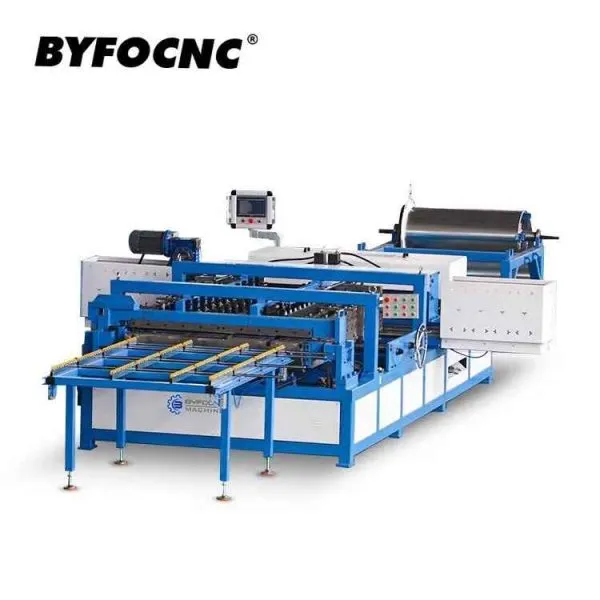
For most ventilation projects, common plate flanges are the balance between efficiency and cost. BYFO’s fully automatic air duct production line can complete the forming of common plate flanges as a whole, eliminating the need for secondary processing.
Do you need to recommend a connection method based on your project? Welcome to contact the BYFO technical team.