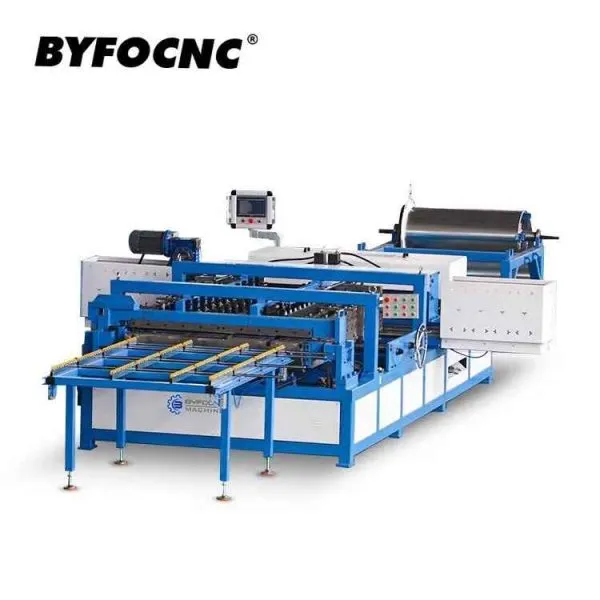

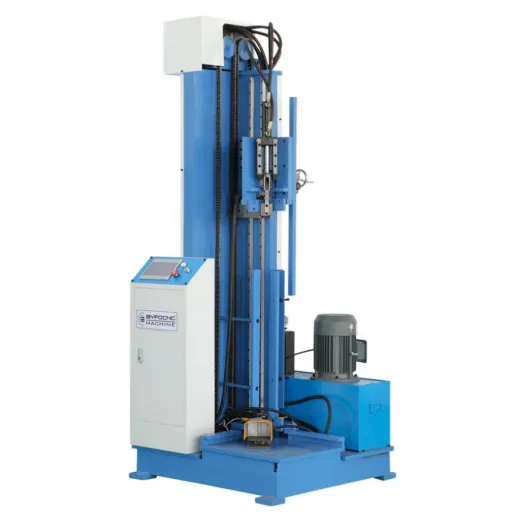
Auto Hydraulic Seam Closer is a highly efficient equipment widely used in the packaging industry. It is mainly used to seal bottles, cans and other containers to ensure product safety and quality. Through the strong pressure of the hydraulic system and combined with automatic control technology, the automatic hydraulic sealer can achieve accurate and high-speed sealing operations, greatly improving production efficiency and sealing quality.
Compared with manual sealing, this equipment not only greatly reduces labor costs, but also effectively avoids errors caused by manual operation, meeting the needs of modern production for precision, stability and efficiency. Applicable to many industries such as food, cosmetics, and medicine, Auto Hydraulic Seam Closer has become an indispensable and important equipment in modern packaging lines.
Maintenance and care of Auto Hydraulic Seam Closer
Extending the service life of the Auto Hydraulic Seam Closer can not only effectively reduce production costs, but also improve the stability and efficiency of the production line. To this end, reasonable daily maintenance and regular inspections are essential. Through a careful maintenance process, equipment failures can be avoided and the sealing machine can be ensured to continue to operate efficiently.
Inspection and maintenance of hydraulic system
- Inspection and replacement of hydraulic oil: Check the hydraulic oil level of Auto Hydraulic Seam Closerregularly, keep the oil level within the specified range, and avoid low oil level causing insufficient pressure in the hydraulic system or overheating of the equipment. Hydraulic oil needs to be replaced regularly, usually every 6 months or 1 year, depending on the frequency of use and the quality of the oil.
- Cleaning of oil filtration system: Check the hydraulic oil filter, clean or replace the filter regularly to prevent oil circuit blockage. Impurities and moisture in the oil can cause serious damage to the hydraulic system and affect the working efficiency and life of the equipment.
- Check hydraulic pipes and joints: Check the hydraulic pipes and joints regularly to ensure that there is no oil leakage. If oil leakage is found, it should be repaired immediately to avoid a drop in hydraulic system pressure or an increase in oil consumption.
Inspection and maintenance of electrical system
- Wire and cable inspection: Check whether the electrical circuit of Auto Hydraulic Seam Closeris intact and whether the wires are aging or damaged. Damaged wires should be replaced in time to avoid electrical short circuits or other safety accidents.
- Electrical component cleaning: Clean the dust on the electrical components regularly to prevent electrical failures due to dust accumulation. Especially the wiring terminals and relays in the electric control cabinet, which can maintain good conductivity after cleaning.
- Update and check the control system software: ensure the normal operation of the PLC control system and the operation interface program, and regularly check whether the software needs to be updated to ensure stability and efficiency in the production process.
Avoid equipment failure through the correct maintenance process
- Establish a detailed maintenance file: record the content and time of each maintenance, inspection and repair of Auto Hydraulic Seam Closerto ensure that various maintenance tasks are carried out on time to avoid omissions or delays.
- Develop a regular inspection plan: formulate a regular inspection and maintenance plan based on the use of the equipment to ensure that all key components are regularly inspected and maintained.
- Train operators: regularly train operators to understand the daily maintenance points and troubleshooting methods of the equipment, improve the standardization and correctness of equipment operation, and reduce failures caused by human factors.
- Replace vulnerable parts in time: regularly check vulnerable parts (such as seals, drive belts, filter elements, etc.) and replace them in time to prevent aging and damage from affecting equipment performance.
Comparison between Auto Hydraulic Seam Closer and traditional sealing technology
Auto Hydraulic Seam Closer has many advantages over traditional mechanical sealers. First of all, in terms of precision, the hydraulic drive system can provide stable and adjustable pressure to ensure that the sealing process is more accurate and uniform, avoiding the problem of inconsistent sealing caused by the fixed pressure of traditional mechanical transmission. In terms of production efficiency, Auto Hydraulic Seam Closer adopts an intelligent control system, which can achieve efficient automatic operation and is suitable for large-scale, high-speed production lines, while traditional mechanical sealers require more manual intervention and are less efficient.
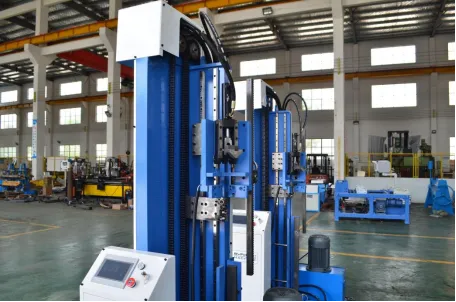
In addition, hydraulic sealers are more adaptable and can handle a variety of packaging materials and complex sealing requirements, while traditional mechanical sealers are often limited to single materials or low-requirement sealing scenarios. In terms of long-term costs, although the initial investment of Auto Hydraulic Seam Closer is high, it has a low failure rate, intelligent maintenance, and lower operating costs, while traditional mechanical sealers increase costs due to more manual participation and frequent maintenance. Overall, Auto Hydraulic Seam Closer shows obvious advantages in precision, efficiency, applicability and long-term economy.
FAQ
Q1: What industries are automatic hydraulic sealers suitable for?
A1: Automatic hydraulic sealers are widely used in food, beverage, medicine, cosmetics, chemicals and other industries, especially for occasions that require high sealing accuracy and large-scale production.
Q2: Does the hydraulic sealer have high energy consumption?
A2: Compared with traditional mechanical sealers, the energy consumption of automatic hydraulic sealers is more reasonable. Although the hydraulic system may require higher instantaneous power, its efficient sealing process and automated control can reduce energy waste.
Q3: Is the troubleshooting of the automatic hydraulic sealer complicated?
A3: The automatic hydraulic sealer is equipped with a fault diagnosis system that can monitor and diagnose common faults in real time, reducing the need for manual intervention. Once a problem occurs, the system will provide detailed fault information for quick repair.