
In HVAC ventilation systems, spiral ducts and welded ducts are two common circular duct solutions. Both can transport air, but their manufacturing processes, performance characteristics, and cost structures are completely different. Choosing the wrong one could lead to unnecessary expenses or problems during project acceptance.
BYFO helps you quickly determine the right option from 5 perspectives.
I. Quick Overview
| Comparison item | Spiral duct (locking seam) | Welded duct (straight seam/spiral welded) |
| Forming process | Steel strip spiral seam, no welding | After the sheet metal is cut, it is formed by argon arc welding/submerged arc welding |
| Air leakage rate | ≤2% | ≤5% |
| Pressure resistance | Low to medium pressure (≤1500 Pa) | High pressure (up to 1.6 MPa or higher) |
| Installation rate | Fast (prefabricated, 3-5 times faster than welded duct on site) | Slow (on-site welding, many procedures) |
| Relative cost | 1 (Benchmark) | 2.5-4 times |
| Typical lifespan | Galvanized steel: 5-10 years / Stainless steel: 10-15 years | Stainless steel: 20–30 years |
II. Core Differences Between the Two Types of Ducts
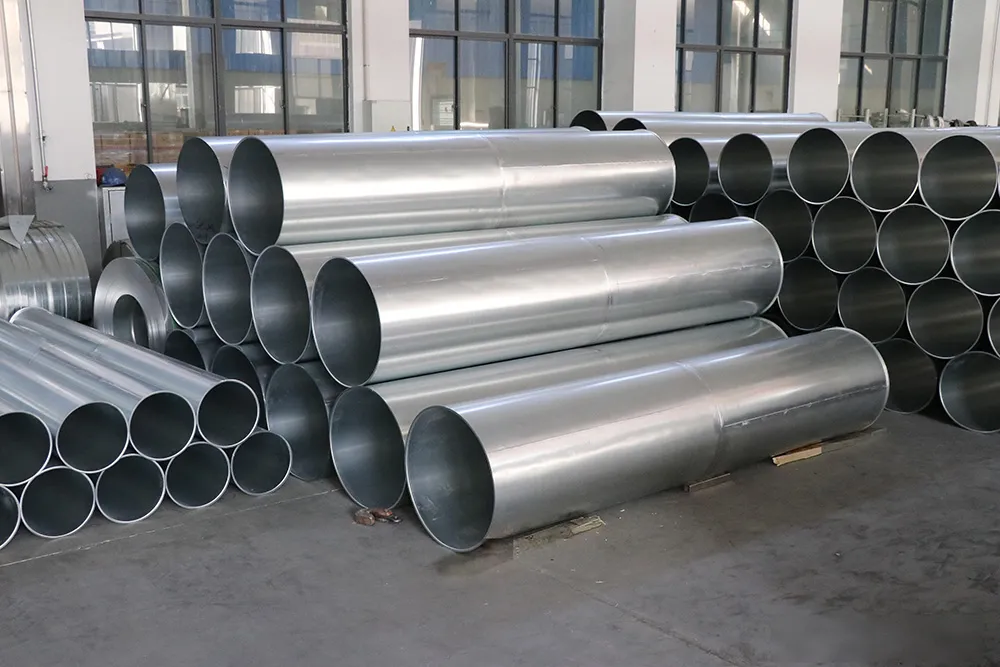
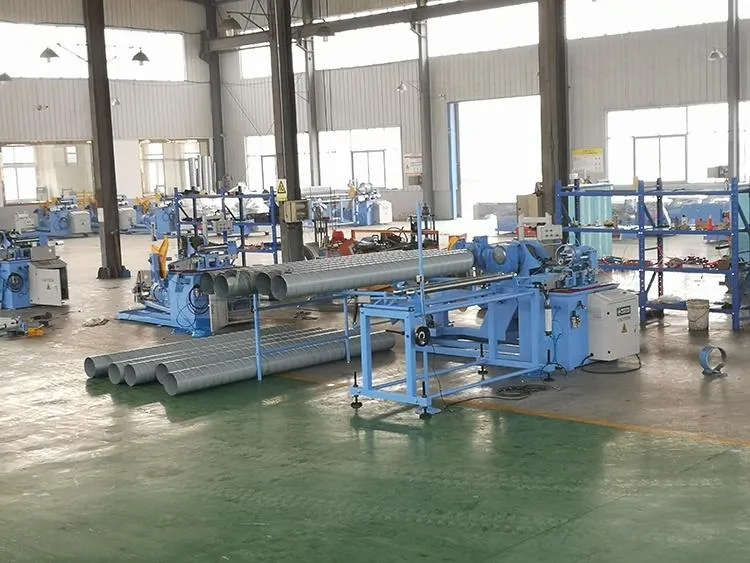
Spiral Duct: Steel strips are continuously wound and seamed using a spiral duct machine, resulting in a duct without any welded joints. The spiral seam itself acts as a reinforcing rib, giving the duct excellent circumferential stiffness.
Advantages:
• No welds, extremely low air leakage rate (≤2%)
• The compressive strength of the spiral structure is approximately 2.5 times that of welded duct
• Factory prefabrication, on-site installation speed is 3-5 times faster than welded duct
• Smooth inner wall, low air resistance, low energy consumption
• Low cost, galvanized spirals cost approximately 1/3 of stainless steel welded duct.
Limitations:
• Limited seam strength, unsuitable for high-pressure systems (>1500Pa)
• Galvanized spirals are not heat-resistant (zinc layer peels off above 200℃)
• The seam may accumulate dust in environments with extremely high cleanliness requirements.
Welded Duct: Steel plates are cut and then welded (argon arc welding, submerged arc welding, etc.) to form the duct. The weld can be straight or spiral.
Advantages:
• High welding strength, capable of withstanding high pressure (above 1.6MPa)
• High temperature resistance (304 up to 400℃, 316L up to 600℃)
• Can be manufactured in any shape (round, rectangular, irregular shapes)
• Stainless steel welded duct can last 20-30 years.
Limitations:
• High cost (304 welded pipe is approximately 2.5-3 times more expensive than galvanized spiral welded pipe)
• Long manufacturing cycle, large amount of on-site welding work
• More welds, higher risk of air leakage than spiral welded duct
III. How to Choose? A Decision Table
| Project type | Recommended solution | Reason |
| Central air conditioning in shopping malls and office buildings | Spiral duct | Low to medium voltage, large quantity, fast installation, and low cost |
| Ventilation and fire smoke exhaust systems for underground garages | Spiral duct | Sufficient strength, minimal air leakage, and highly cost effective |
| General ventilation and dust removal in industrial plants | Spiral duct | Ordinary dust, non-corrosive, spiral is sufficient |
| Long-distance straight air supply | Spiral duct | Low air resistance and low energy consumption |
| Acid and alkali waste gas from chemical plants | Welded duct (stainless steel) | Galvanized sheet will corrode and perforate within 1-2 years |
| Food/Pharmaceutical cleanroom | Welded duct (stainless steel) | No seams, no risk of coating peeling |
| High-temperature flue gas emission (>200℃) | Welded duct (stainless steel) | The galvanized layer peels off at temperatures above 200℃ |
| High-pressure system (>1500 Pa) | Welded duct | Limited seam strength, prone to air leakage under high pressure |
| Coastal high salt fog environment | Welded duct (316L) | Insufficient corrosion resistance of galvanized spirals |
In short:
• 90% of routine ventilation projects → Spiral duct (cost-effective, time-saving, and sufficient)
• Special scenarios such as corrosion, high temperature, high pressure, and cleanrooms → Welded duct (more expensive, but less prone to problems)
IV. Regarding Cost: Not Just Material Prices
| Cost item | Spiral duct | Welded duct |
| Material cost | Low | High (2.5-4 times) |
| Production Cost | Low (continuous machine forming) | High (manual welding) |
| Installation cost | Low (precast; 3–5 times faster on-site) | High (large amount of on-site welding) |
| Maintenance cost | Medium (galvanized surface requires rust prevention) | Low (stainless steel, maintenance-free) |
| Total cost in the short term | Low | High |
| Total cost (20 years) | Medium (may require replacement once) | Low (one-time installation for lifetime use) |
Selection logic: Short-term projects with limited budgets → Spiral ducts; Long-term projects seeking lifetime maintenance-free operation → Stainless steel welded duct.
V. What Can BYFO Do For You?
As a professional duct equipment manufacturer, BYFO offers two support solutions:
Spiral duct solution:
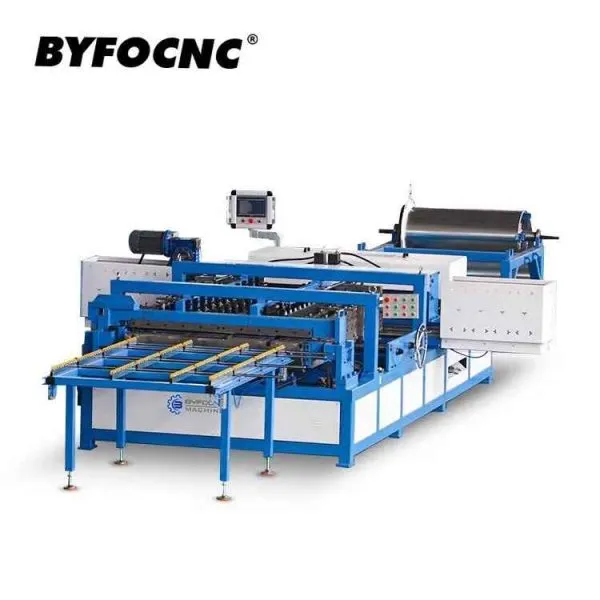
• BYFO spiral duct machine, diameter Φ80-1600mm, thickness 0.4-1.5mm
• Flying cutter, smooth and burr-free duct ends
• Can process galvanized sheet/stainless steel/aluminum sheet
Welded duct supporting solution:
• BYFO plasma cutter, precise material cutting
• Plate rolling machine, lock former machine, and other supporting equipment
Regardless of your chosen duct solution, BYFO can provide corresponding production equipment and technical support.
Unsure which to choose? Send us your project type, air pressure requirements, and operating environment, and BYFO technical team will provide professional advice within 24 hours.
Email: byfo@byfomachine.com
Whatsapp: (0086)18255536645