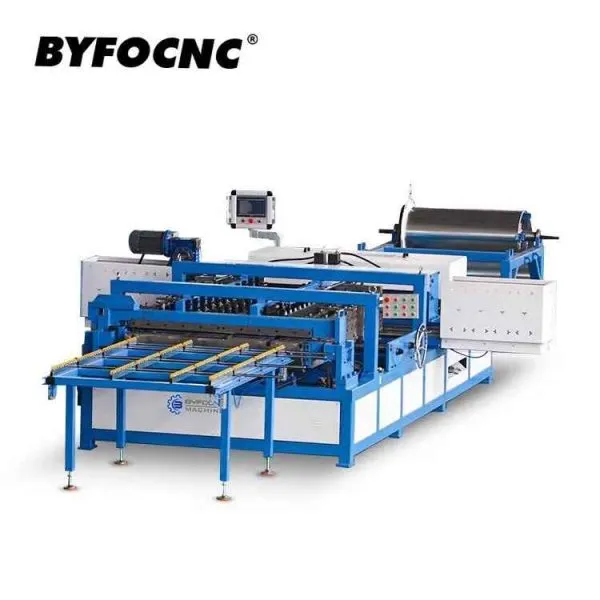

The joining and sealing of metal sheets is an important step in today’s industrial fabrication. This has a direct relationship with the strength and service life of the structure in ventilation ducting, car bodies, home appliance shells, and any other sheet metal product because it has to be perfectly sealed. Whilst this has been traditionally performed manually, not only is it an inefficient method, but it also results in inconsistent finished products. There is still little doubt that Pneumatic Seam Close Machines will be dominant intelligent equipment within industries for high efficiency, precision labor labor-saving characteristics!
What’s a pneumatic seam close machine?
A pneumatic seam-closer is a mechanical apparatus that utilizes compressed air as its power source and pushes the structural components through a cylinder to accomplish the edge sealing or seaming of the sheet. The basic working principle shall use a pneumatic mechanism to drive a roller or a pressure head to make the metal seams become tightly combined to achieve a fast, uniform, and firm edge sealing effect. It finds application within the production process of spiral ducts, square ducts, metal containers, roll tanks, and other such kinds of products.
Compared with electric or hydraulic equipment, pneumatic seam sealers are simpler in structure, consume less energy, have more flexible control, and easy maintenance. They find application in the wide fields of sheet metal manufacturing and ventilation system production.
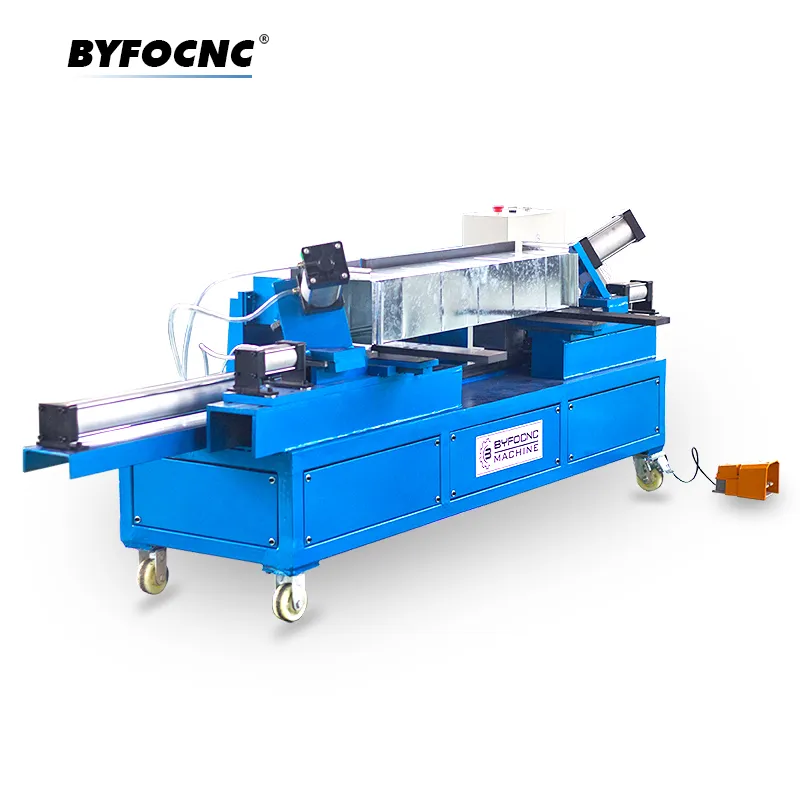
Structure composition of the equipment
The typical pneumatic seam sealer is mainly composed of the following parts:
- Pneumatic drive system: This comprises an air compression system, a cylinder, a control valve, etc. It is the “heart” of the equipment since it provides the main power.
- Roller mechanism: the plate seam is pressed and closed through one or more sets of special rollers.
- Guide device: ensure that the workpiece moves smoothly and the joint position is accurate.
- Bracket and base: provide equipment structural support to ensure the stable operation of the machine.
- Control panel: normally, it adopts button control or PLC control system to realize operation functions such as start, stop, speed adjustment, etc.
Some top-tier units come with an auto-feeder or CNC positioner, making work much faster and more automated.
How it Works and the Steps to Use it
The simple way a pneumatic seam sealer works is:
- Turn on the air source: Link the machine to a system that compresses air and set the right pressure (usually 0.4~0.8MPa).
Put in the item: Place the metal sheet that needs sealing into the guide track. - Start the equipment: Just press the start switch. The cylinder will then drive the pressing wheel to run.
- Seam forming: The roller now moves along the joint. It completes the pressing and sealing actions at the same time.
- Automatic shutdown: When the seam has been sealed, the equipment shall stop. The workpiece shall automatically exit or be manually taken out.
The entire process is quick and easy, basically does not require much manual effort, which in turn greatly enhances output efficiency as well as the uniformity of the end product.
Areas of use
Pneumatic seam sealers find broad applications in:
- Ventilation plus heating & ventilation engineering (HVAC): This is one of the key areas since it involves duct making, which includes longitudinal or circular seaming of spiral ducts, rectangular ducts, etc.
- Sheet metal processing plant: Applicable to the side seam sealing of various light steel structure products.
- Automotive industry: Applicable to the local shaping of body sheet metal parts.
- Packaging container production: For example, the sealing of metal barrels, oil tanks, paint tanks, etc.
- Home appliance manufacturing: For example, the assembly process of product shell panels, like refrigerators and washing machines.
Because of its great flexibility and good sealing quality, air-driven seam sealers have become standard tools on lots of making lines.
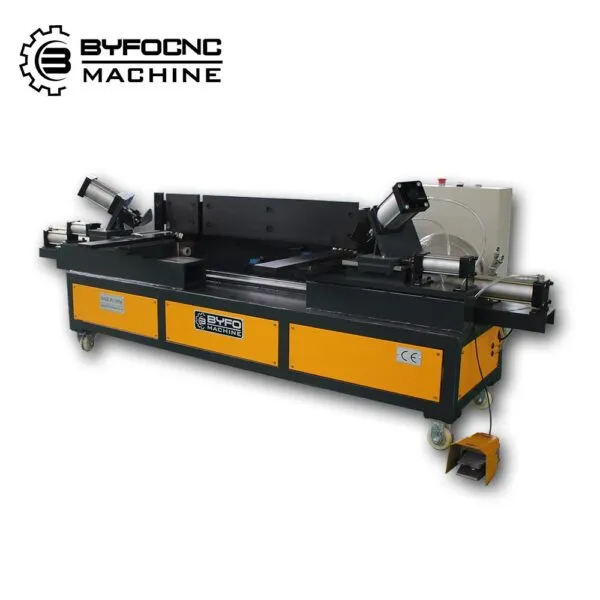
Benefits and features of air-driven seam sealers
Compared to old-style seam sealing machines, air-driven seam sealers have these great advantages:
High productivity
Single molding, continuous operation, average sealing speed can reach 20-40 meters/minute; production capacity is greatly increased.
Accurate and consistent
The roller uniformly exerts pressure. Edge sealing is done very tightly, and so it is not easy to have issues of false sealing and leaking seams, thus ensuring the sealing performance of the product.
Simple operation
There is only a simple structure, and the control is very convenient. Operation can be completed by one person, thus reducing labor costs.
Energy saving and environmental protection
Powered by compressed air, it consumes low energy and causes no oil pollution; it suits the concept of green manufacturing.
Cheap to maintain
Pneumatic parts have a long life, a low failure rate, and easy maintenance. Typically, the equipment service life of more than 5 years
Facing such a wide range of models on the market, choosing a pneumatic seam sealer that suits your production needs becomes very important. Consider the following aspects:
Choose based on the type of workpiece
Identify the shape, thickness, and type of metal sheet to be sealed—duct, container, barrel, or box structure—and select the equipment that has a corresponding roller structure and size of guide rail.
Check the pressure and speed parameters
Ensure that the working pressure and roller speed of the equipment meet the rhythm requirements of the production line to avoid production capacity bottlenecks.
Brand and after-sales service
Give priority to brands with mature technology and a good reputation to ensure stable equipment quality and enjoy perfect after-sales support.
Whether customization is supported
Some special products, such as special-shaped pipes and special thickness plates, may require customized rollers or guide devices. When purchasing, you should ask whether they can be customized.
Daily maintenance and care recommendations
To ensure the long-term operation of the pneumatic seam sealer, daily maintenance cannot be ignored:
Regularly check if the air system is leaking and keep the air pressure stable.
Clean the roller and guide rail surface after each shift to avoid dust accumulating.
Lubricate moving parts to reduce wear.
Check the sensitivity of the cylinder and solenoid valve, and replace them in time if there is a delay.
Keep comprehensive maintenance on the whole machine regularly to ensure the safety of the electrical system.
Proper upkeep will go a long way to prolonging the lifespan of the machine and lowering the downtime rate.
The power to make industrial connections more reliable
As an important equipment in joining and sealing operations, pneumatic seam sealers are gaining increasing importance across diverse manufacturing scenarios. From enhancing product quality to streamlining the production process, it is slowly but surely replacing the traditional manual or inefficient counterparts to become a valuable constituent of the intelligent manufacturing modernization of today’s factories.
For manufacturing companies, choosing an efficient, stable, and intelligent pneumatic seam sealer is not only a key step in improving production line capacity, but also an important weapon to win market competitive advantages.