
As the “artery” of the heating, ventilation, and air conditioning (HVAC) system, the performance of air ducts directly determines the system’s energy efficiency, air quality, and operational reliability. Modern air duct processing products have formed a diversified product matrix to meet the stringent requirements of different application scenarios. The following will elaborate on the applications and future development prospects of duct processing products from multiple aspects.
Diversified application system ofduct processing products
(1) Building a ventilation and air conditioning system
In the construction industry, duct processing products are primarily utilized in the construction of ventilation and air conditioning systems. Through a well-designed and processed ventilation system, fresh outdoor air can be introduced into the interior, while indoor stale air can be expelled, thus achieving effective air circulation, effectively regulating indoor air quality, and ensuring comfort for living and working. In air conditioning systems, insulation materials can be added to the ducts to ensure the efficient delivery of cold and hot air, while also enhancing the energy efficiency of the system.
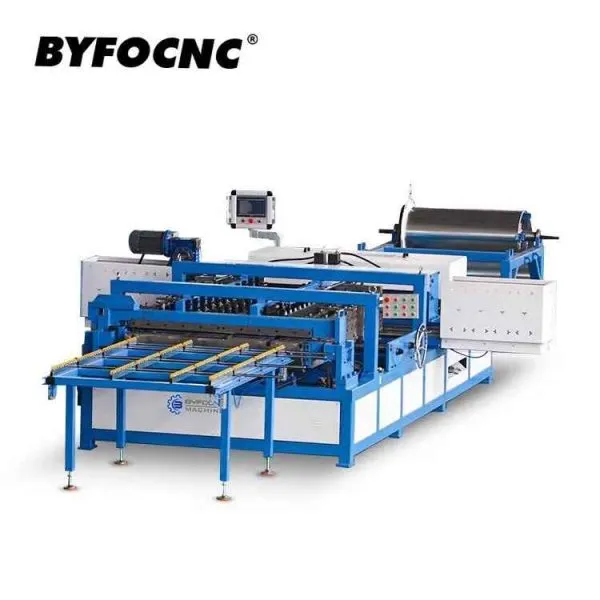
With its high structural strength, long lifespan, excellent fire resistance, and mature TDF/TDC flange technology, galvanized steel sheet ducts have become the mainstream choice for large public buildings and industrial facilities. Its automated production line enables efficient and high-precision mass production.
(2) Industrial exhaust system
Industrial production processes often generate a large amount of exhaust gas, smoke, and other pollutants, posing a threat to the production environment and employee health. Duct processing products are used to design and produce exhaust systems to effectively emit these pollutants and protect the production environment and employee health. Especially in heavy industry sectors such as chemical, metallurgical, and electric power, the application of duct processing products is more extensive and important.
(3) Application in special environments
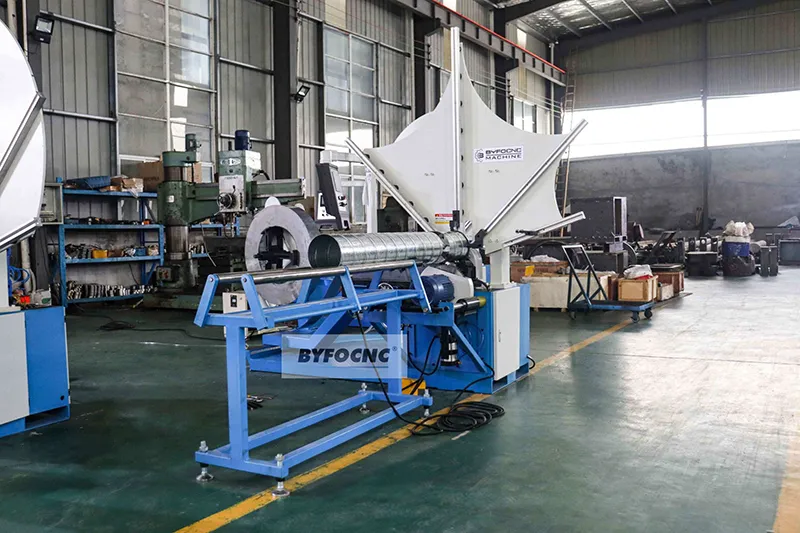
In places with extremely high environmental requirements, such as hospital operating rooms and clean workshops, duct processing products need to be made of special materials and crafted using specialized techniques to ensure the cleanliness and sterility of air circulation. These special ducts not only require corrosion-resistant and easy-to-clean materials, but also exhibit high levels of sealing and airtightness to maintain the cleanliness of indoor air.
Overall, stainless steel and aluminum ducts are more suitable for such scenarios, but they also impose higher requirements on the mold precision of processing equipment and welding techniques.
In addition, there are non-metallic and composite air ducts, which provide more solutions for such specialized scenarios. They can effectively address issues such as energy conservation, condensation prevention, corrosion resistance, or spatial aesthetics in special scenarios, and serve as an effective complement to metal air duct systems.
For example, a phenolic composite air duct/glass magnesium composite air duct, which integrates insulation and ventilation functions, is lightweight, has a low air leakage rate, and good insulation performance. It is widely used in occasions with high energy-saving requirements and limited installation space.
For example, a fiber fabric air duct, which supplies air through fiber pores or directional openings to achieve uniform and soft dispersed ventilation. It is often used in large spaces such as sports venues, industrial plants, supermarkets, etc.
Core technology trends driving industry development
With the acceleration of urbanization and the continuous improvement of people’s requirements for quality of life, the market demand for building ventilation and air conditioning systems continues to grow. Meanwhile, the rapid development of industrial production has also driven an increase in demand for exhaust systems. In addition, with the increasing popularity of green building concepts, the application prospects of duct processing products in the field of energy conservation and environmental protection are also very broad.
Currently, the duct processing industry is undergoing a profound transformation from traditional manufacturing to advanced manufacturing, and its development prospects are shaped by the following major technological trends:
(1) Innovation of Production Mode: From “Manufacturing” to “Intelligent Manufacturing.”
With the continuous development of technology, the processing technology of air ducts is also constantly advancing. In the future, the duct processing industry will pay more attention to technological innovation and application, promoting industrial upgrading and high-quality development.
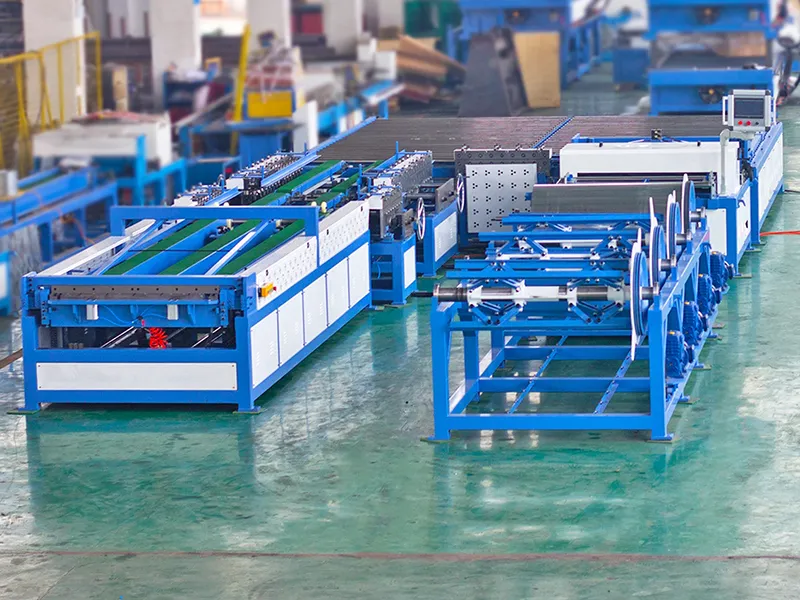
Fully automated production line integration: Integrating CNC nesting, flange forming, seam reinforcement, corner code installation and other processes into an intelligent production line. Through the central control system (MES), seamless connection and data traceability from sheet metal to finished products are achieved, greatly improving production efficiency and product consistency.
Digital twin and virtual debugging: Simulate the entire production process in a virtual environment before product production, optimize equipment parameters and production pace, shorten the actual commissioning cycle, and reduce material waste.
(2) Product performance upgrade: innovation in materials and structure
High-performance composite materials: Developing lightweight composite sheets that combine Class A fire resistance, high thermal insulation, antibacterial, and mold-proof functions is an important direction for future duct materials.
Structural optimization design: Through CFD (Computational Fluid Dynamics) simulation, optimize the structure of components such as diversion plates and reducers inside the air ducts, reduce system resistance and noise, and achieve “fine-grained energy saving”.
Deepening of prefabricated technology: Promoting more precise modular prefabrication technology, making on-site installation like “building blocks”, reducing on-site hot work and cutting operations, improving construction quality and speed, and aligning with the trend of industrialization in construction.
(3) Greenification in the full life cycle dimension
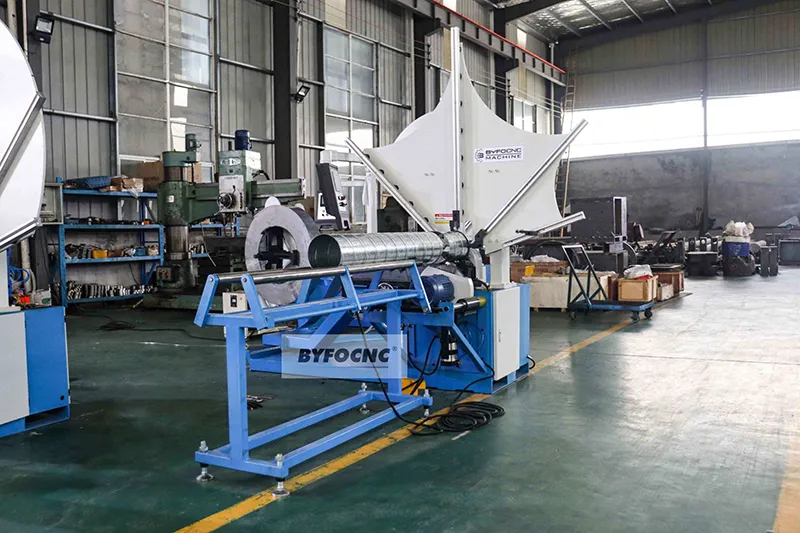
Green manufacturing: Processing equipment is evolving towards lower energy consumption, reduced noise, and minimized oil pollution. For instance, adopting servo motor drives instead of traditional hydraulic systems can achieve energy savings of 20%-40%.
Recyclable design: Design duct connection methods that are easy to disassemble and recycle, enhancing the recycling rate of raw materials such as steel.
Digital empowerment for operation and maintenance: Implanting RFID or QR code identifiers into duct systems, linking them to production information, material reports, and installation data, provides a digital foundation for future smart building operation and maintenance, duct cleaning, and energy efficiency audits.
Future Outlook: Integration, Intelligence, and Sustainability
(1) Deep integration with Building Information Modeling (BIM): The design, processing, prefabrication, logistics, and installation of duct products will be fully integrated into the BIM process, achieving true Design-Fabrication-Installation integration (DFMA), which fundamentally resolves on-site conflicts and reduces rework.
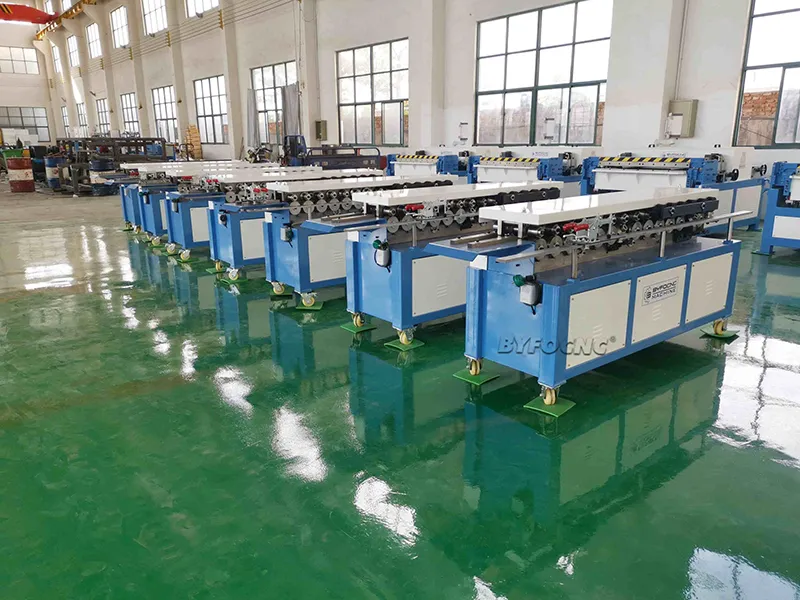
(2) Leap in the intelligence of processing equipment: By introducing advanced technologies such as intelligent processing equipment and intelligent control systems, automation, intelligence, and precision in duct processing can be achieved. This not only enhances production efficiency and product quality but also reduces labor costs and energy consumption, propelling the industry towards higher levels of development.
(3) Serving the “dual carbon” strategic goal: As a crucial component of building energy consumption, the future technological evolution of duct systems will always prioritize reducing carbon emissions throughout the system’s entire lifecycle. From green materials, efficient production to low-resistance operation, the duct industry will become a significant force in promoting energy conservation and carbon reduction in the construction sector.
In summary, duct processing products have surpassed the traditional concept of ventilation ducts and evolved into a key technical system that influences building safety, energy efficiency, and a healthy environment. With the continuous advancement of technology and the sustained growth of the market, the duct processing industry will undoubtedly embrace a brighter development future. Faced with the historic opportunities presented by intelligent manufacturing and green buildings, only by actively embracing technological innovation, process innovation, and mode transformation can we lead the future and seize the initiative in the increasingly fierce market competition and the requirements of sustainable development. All BYFO people will take this as our mission, continuously optimize our products, strive for excellence, and endeavor to provide more and better duct processing equipment to customers worldwide.