
——BYFO Industry Insights
In food processing workshops, ventilation ducts are not only the infrastructure for regulating air and controlling temperature and humidity, but also a key link in ensuring food safety. A poorly designed or poorly made ventilation system may become a breeding ground for microorganisms, foreign matter contamination, and condensation water accumulation, directly threatening the quality and safety of food.
Stainless steel sanitary air ducts have become the preferred solution for ventilation systems in food workshops due to their excellent corrosion resistance, smooth inner wall surface, and easy cleaning characteristics. This article will delve into the special requirements for ventilation ducts in food workshops and why stainless steel ducts have become an irreplaceable choice.
1、 Environmental characteristics and ventilation challenges of food workshops
1.1 Typical environmental characteristics
| Environmental factor | Typical parameter | Impact on air ducts |
| Temperature | Room temperature to 40℃ (some workshops employ high-temperature cooking) | Accelerating corrosion of common steel |
| Humidity | 60%-90% (frequent cleaning) | High humidity environments are prone to rust formation |
| Acid and alkali gases | Acidic (fermentation), alkaline (volatilization of cleaning agents) | Corrosion of galvanized coating |
| Fume/steam | The situation is particularly severe in baking and frying workshops | Attached to the inner wall of the pipeline |
| Frequent cleaning | Daily high-pressure water gun irrigation | Resistant to erosion and waterproof is ruquired |
1.2 Special requirements for ventilation in food workshops
1. Strict hygiene standards: There must be no dead corners or depressions on the inner wall of the air duct to avoid dust accumulation and microbial growth
2. Corrosion resistance: Resistant to the erosion of cleaning agents and acidic/alkaline gases
3. No pollution risk: There shall be no risk of foreign object detachment such as rust or coating peeling off
4. Easy to clean: Able to withstand high-pressure water gun, foam cleaning and steam disinfection
5. Temperature resistance: From low-temperature refrigeration to high-temperature cooking, the pipeline must not deform or crack
6. Compliance with regulations: Meet the relevant requirements of GMP, HACCP, FDA, etc. in the food industry
2、 Comparison of the performance of common duct materials in food workshops
2.1 Galvanized steel sheet air duct
| Item | Performance | Conclusion |
| Corrosion resistance | The zinc coating is prone to oxidation and whitening in humid environments, eventually leading to rust formation | ❌ Inapplicability |
| Smoothness of inner walls | There may be gaps at the bite, which can easily harbor contaminants | ❌ Difficult cleaning |
| Foreign object risk | Zinc coating flaking may fall into food products | ❌ Hidden danger |
| Life span | Rust appears within 2-5 years | ❌ Replace frequently |
Conclusion: Galvanized sheet is not suitable for food workshops, especially in areas with high humidity and cleaning requirements.
2.2 Aluminum plate air duct
| Item | Performance | Conclusion |
| Corrosion resistance | The aluminum surface oxide film is stable and resistant to general corrosion | ✔Relatively good |
| Strength | Low, high-pressure irrigation may cause deformation | Need to notice |
| Cleanliness | The surface is smooth but soft and prone to scratching | Scratches can harbor dirt |
| Alkali resistance | Not resistant to strong alkali cleaning agents | ❌ Inapplicability |
| Price | Medium | – |
Conclusion: Aluminum plates can be used in dry and alkali free cleaning areas, but they are not the best choice.
2.3 Stainless steel air duct (304/316)
| Item | Performance | Conclusion |
| Corrosion resistance | 304 stainless steel is resistant to common acids and alkalis, while 316 stainless steel is resistant to chloride ions and strong acids. | ✔ Excellent |
| Smoothness of inner walls | Achievable Ra ≤ 0.8 μm with no dead zones | ✔ Easy to clean |
| Strength | High, resistant to high-pressure irrigation | ✔ Stable |
| Temperature tolerance | -196℃~800℃ | ✔ Excellent |
| Foreign object risk | No coating detachment, no corrosion | ✔ Safety |
| Price | Relatively high | – |
Conclusion: Stainless steel is the optimal choice for ventilation ducts in food workshops.
3、 The core advantages of stainless steel sanitary air ducts
3.1 Excellent corrosion resistance performance
The food workshop often uses acidic (citric acid, acetic acid) and alkaline (NaOH) cleaning agents, and may also contain chloride ions (disinfectant water). Corrosion resistance of different stainless steel grades:
| Grade | Resistant to common acids and alkalis | Chloride-resistant | Applicable scene |
| 304 | ✔ Good | Common | Dry, non-saline environment |
| 316 | ✔ Good | ✔ Excellent | Coastal areas, high humidity, frequent disinfection |
Suggestion: Generally, using 304 stainless steel in food workshops can meet the requirements; It is recommended to use 316 stainless steel in coastal areas or workshops that use chlorine containing disinfectants.
3.2 Smooth and seamless inner wall design
Food grade air ducts require no cracks, dents, or sharp angles on the inner wall to prevent microbial attachment and proliferation.
BYFO sanitary air duct processing characteristics:
-Internal bite design: The bite is folded towards the outer side of the duct wall, and the inner wall is completely smooth
-Welding+Polishing: For areas with ultra-high requirements, fully weld and polish after biting to Ra ≤ 0.8 μ m
-Rounded corner transition: The corner of the square air duct adopts a circular arc design, with no dust accumulation or dead corners
3.3 Easy to clean and disinfect
Stainless steel air ducts have a dense surface, do not adsorb dirt, and can withstand:
-High pressure water gun (100-200 bar)
– Foam cleaner
-Hot water/steam (up to 120 ℃)
-Common disinfectants (such as peracetic acid, sodium hypochlorite, etc.)
After cleaning, there is no residue and it dries quickly, effectively preventing the growth of microorganisms.
3.4 No pollution risk
Unlike galvanized sheet, stainless steel does not have the problem of coating peeling off; Unlike ordinary carbon steel, stainless steel does not rust or shed chips. This is crucial for food safety – even tiny metal foreign objects can lead to product recalls and brand losses.
3.5 Long service life
Under normal use and maintenance conditions, the lifespan of stainless steel ducts can reach over 20 years, far exceeding the 5-8 years of galvanized sheet. Although the initial investment is higher, the total lifecycle cost is lower.
4、 Suggestions for selecting air ducts in different areas of the food workshop
| Area | Environment characteristic | Recommended material | Recommended thickness | Special requirements |
| Raw Material Reception Area | General environments, dust may be present | 304 stainless steel | 0.8mm | The inner wall is smooth |
| Processing area (room temperature) | High humidity, frequent cleaning | 304 stainless steel | 1.0mm | Internal bite or welding |
| Heating/Steaming Area | High-temperature, steam | 304 stainless steel | 1.2mm | Welding connection |
| Frying area | Oil smoke, High temperature | 304 stainless steel | 1.0mm | Equip with oil mist separator |
| Fermentation/marcing Area | Acidic gases, high humidity | 316 stainless steel | 1.0mm | Welding + passivation |
| Cooling/packaging Area | Cold, drying | 304 stainless steel | 0.8mm | Anti-condensation design |
| Cleaning area | Strong alkali, high-pressure water | 316 stainless steel | 1.2mm | Full welding treatment |
| Cold storage | Low-temperature, frosting | 304 stainless steel | 0.8mm | Insulating layer |
5、 Processing technology requirements for sanitary air ducts
5.1 Internal biting technique
The traditional external bite will form a raised gap on the inner wall of the pipeline, which is prone to accumulating food residue and moisture. The inner bite folds the seam towards the outside of the pipe, keeping the inner wall flat.
BYFO provides specialized internal bite forming equipment that can process 0.6-1.2mm stainless steel plates, with inner wall smoothness meeting food grade requirements.
5.2 Welding and Polishing
For areas with extremely high requirements (such as sterile filling workshops), it is recommended to use the biting, argon arc welding, and inner wall polishing process:
1. Pre formed bite
2. Argon arc welding sealing joint
3. Polish the inner wall to Ra ≤ 0.8 μ m
4. Acid pickling and passivation treatment
5.3 Connection method
| Connection method | Applicable scene | Sealing performance | Cleaning convenience |
| No flange socket | General area | Medium | Relatively easy |
| Common flange | Medium and Low pressure System | Good | Sealant strip required |
| Steel angle flange with sealing gasket | High pressure, steam | Excellent | The gasket must be food-grade |
| Welding connection | Sterile area | Perfect | Best, but not removable |
5.4 Surface Treatment
2B surface (cold rolled glossy surface): most commonly used, smooth and easy to clean
Surface No.4 (brushed surface): more wear-resistant, suitable for frequent scrubbing
Mirror polishing: used in areas with extremely high cleanliness requirements
6、 Related regulations and certification standards
The ventilation ducts in the food workshop need to comply with the following standards:
| Standard/ regulation | Scope of application | Key requirement |
| GB 14881 | China food production general hygiene specifications | The inner walls of the device are smooth, free of dead zones, and easy to clean |
| FDA 21 CFR | U.S. food contact materials | Material safety, no migration |
| EC 1935/2004 | EU food contact materials | Food safety must not be compromised |
| EHEDG | European health engineering design | Design specifications for hygienic equipment |
| 3-A Sanitary | U.S. health standards | Cleanability certification |
Suggestion: When purchasing stainless steel ducts, require suppliers to provide material certification (MTC) to ensure the authenticity of the brand and qualified composition.
7、 Investment return analysis: Is stainless steel really “expensive”?
7.1 Initial Cost Comparison
Taking a 1000 square meter air duct system as an example:
| material | Material cost | Processing cost | Installation cost | Initial total cost |
| Galvanized sheet (Z275) | 25 thousand | 15 thousand | 10 thousand | 50 thousand |
| Stainless steel 304 (1.0mm) | 75 thousand | 25 thousand | 15 thousand | 115 thousand |
The initial investment for stainless steel is about 2.3 times that of galvanized sheet.
7.2 Whole life cycle cost
| Item | Galvanized sheet (replacement every 5 years) | Stainless steel (20-year lifespan) |
| Initial investment | 50 thousand | 115 thousand |
| Replace in 5 years | 50 thousand | – |
| Replace in 10 years | 50 thousand | – |
| Replace in 15 years | 50 thousand | – |
| Cumulative investment over 20 years | 200 thousand | 115 thousand |
| Maintenance cost (cleaning/repair) | Relatively high (rust-proof treatment) | Low (basically maintenance-free) |
| Loss from production suspension | High (frequent replacement) | Low |
| Total cost | >250 thousand | <120 thousand |
Conclusion: Although stainless steel ducts have a high initial investment, their total cost over a 20-year service life is only about half that of galvanized sheets. More importantly, it eliminates food safety hazards, a value that cannot be measured in monetary terms.
8、 BYFO food grade stainless steel duct solution
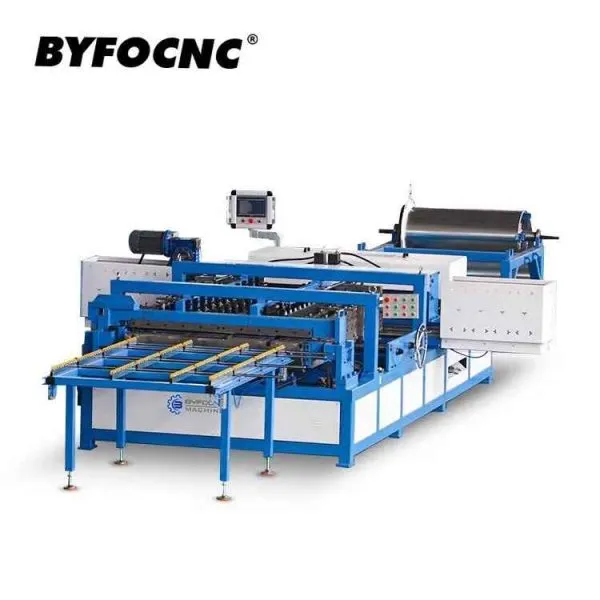
As a professional manufacturer of duct equipment, BYFO provides one-stop stainless steel sanitary duct processing solutions for customers in the food industry:
8.1 Specialized processing equipment
-Stainless steel spiral duct machine: Reinforced structure, hard alloy cutting tools, suitable for stainless steel forming
-Internal bite forming machine: Designed specifically for food grade requirements, with smooth and seamless inner walls
-Automatic welding device: Argon arc welding matching equipment, realizing the integration of biting and welding
-Polishing equipment: Inner wall mirror polishing to Ra ≤ 0.4 μ m
8.2 Process customization
-Provide different process solutions such as internal biting/welding/polishing according to the cleanliness level of the workshop
-Non standard sizes and irregular parts can be customized for processing
-Cooperate with GMP certification and provide a complete set of technical documents
8.3 Successful cases
BYFO has provided stainless steel duct equipment to dozens of domestic and foreign food companies, covering:
-Meat processing
-Dairy production
-Baking food
-Seasoning fermentation
-Central Kitchen
9、 Conclusion
The ventilation ducts in the food workshop are not ordinary “iron pipes”, but an important component of the food safety assurance system.
Choosing stainless steel sanitary ducts means:
-Safety: Eliminate the risks of rust, peeling, and microbial growth
-Compliance: Meet certification requirements such as GMP, HACCP, FDA, etc
-Economy: Lower lifecycle costs
-Worry free: corrosion-resistant, easy to clean, long lifespan
For food companies, saving money on ventilation ducts often means greater risk expenditures in the future. Stainless steel sanitary air ducts are not a cost, but an investment.
BYFO is committed to providing high-quality stainless steel duct processing equipment and customized solutions for the food industry. We can provide professional support for you from material selection, process design to equipment configuration.
Planning the ventilation system for the food workshop?
Welcome to contact the BYFO technical team for free advice on sanitary duct design and material selection.